Cogeneration and trigeneration
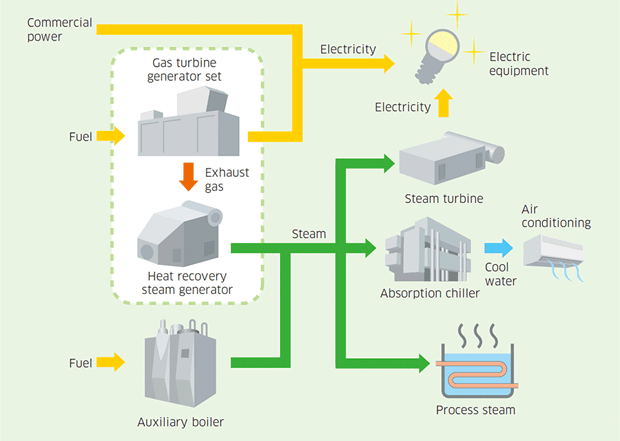
Cogeneration is used to produce electricity and heat at the same time within a single system starting from one fuel source, either fossil or renewable. The production of electricity and heat with separate processes generally does not permit use of the heat produced by the combustion process, which is released into the atmosphere. Cogeneration instead includes the recovery and use of the heat produced by the combustion process, guaranteeing a more efficient use of the primary combustion source.
A valid example of a cogeneration application is the production of electricity with a generating set composed of an engine coupled to an alternator. The heat generated by the engine combustion process is conveyed and used by a heat generator for the production of heat in the form of carriers including:
- hot water or steam for various civil and industrial uses
- chilled water downstream from a later generation via absorption cooling units
The use of the generated heat makes it possible to define the assembly as a “cogeneration plant” if only heat is produced, and “trigeneration plant” if heat and cold is produced, and in general makes it possible to obtain better performance of the system.
Trigeneration / CCHP
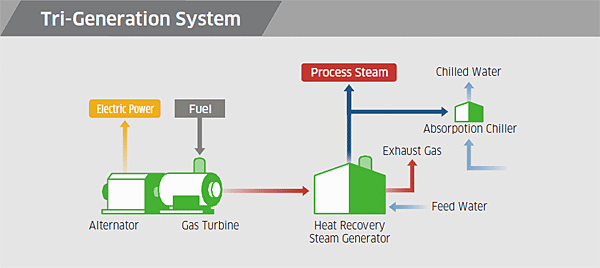
Trigeneration or combined cooling, heat and power (CCHP), is the process by which some of the heat produced by a cogeneration plant is used to generate chilled water for air conditioning or refrigeration. An absorption chiller is linked to the combined heat and power (CHP) to provide this functionality. Quadgeneration takes this process one step further with the addition of systems to purify carbon dioxide from the engine exhaust. Combined cooling and power (CCP) is where electricity and cooling are utilised alone.
Benefits of trigeneration
There are a number of benefits to trigeneration including:
- Onsite, high efficiency production of electricity and heat
- Reduced fuel and energy costs
- Lower electrical usage during peak summer demand
- Engine heat can be used to produce steam of hot water for onsite use
- Significant reductions in greenhouse gas emissions
- No harmful chemical pollutants since water is used as the refrigerant
- Beneficial for improving building’s energy efficiency ratings such as Green Star and NABERS in Australia
Co generation Plants
Co generation is a highly efficient and environmentally attractive means of generating heat and electric power at the same time. Co generation is achieved when a generating plant is constructed in conjunction with an industrial facility (host) that has needs for both the power and heat energy that is produced.
Benefits of Co generation Plants
There are a number of benefits to Co generation Plants including:
- Low pressure steam is provided to the host after it is used for power generation
- Some hosts consume high pressure steam from the cogen, while others supply surplus high pressure steam where it’s used to generate power instead of being vented
- Host waste gases generate power rather than being burnt in flare stacks
- Power is provided to the host to avoid transmission losses
- Sharing process products such as cooling water, compressed air, water treatment and feed water improve efficiency and costs